-
186-1725-6098
-
hmcs@huamaoleather.com



New trend in leather shoe consumption
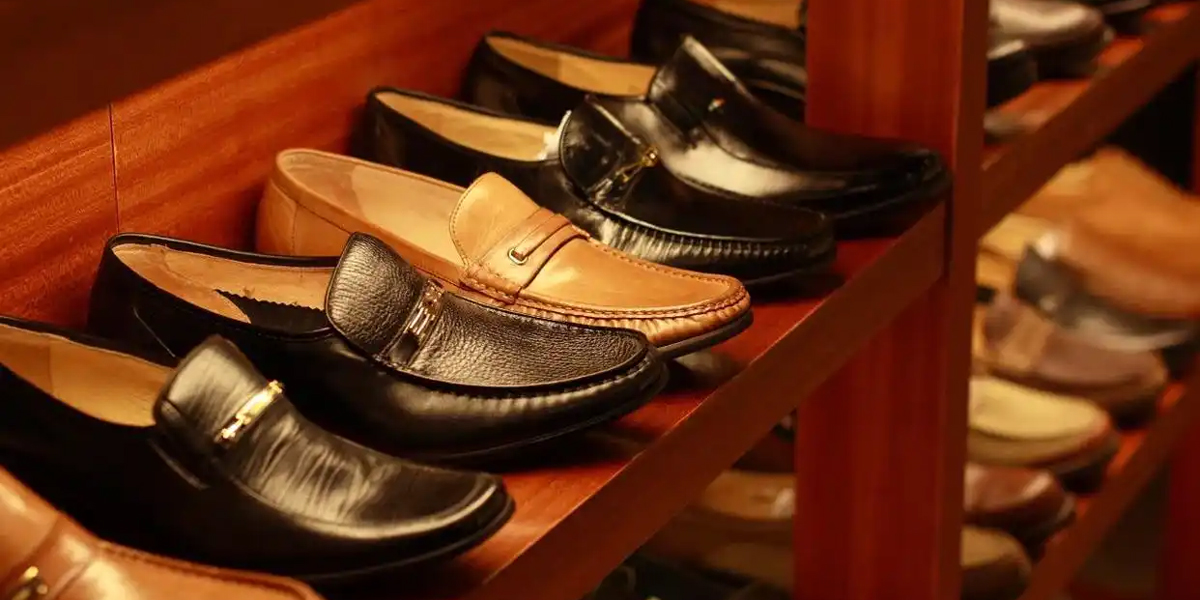
In recent years, there has been ongoing discussion about the increasing number of young people who are choosing not to wear leather shoes. Upon entering office buildings or shopping malls, one can indeed observe a decrease in the number of people wearing leather shoes or high heels. According to industry statistics, from 2013 to 2022, China’s leather shoe production declined from 4.52 billion pairs to 3.63 billion pairs, representing a decrease of nearly 900 million pairs over a decade.
In recent years, there has been ongoing discussion about the increasing number of young people who are choosing not to wear leather shoes. Upon entering office buildings or shopping malls, one can indeed observe a decrease in the number of people wearing leather shoes or high heels. According to industry statistics, from 2013 to 2022, China’s leather shoe production declined from 4.52 billion pairs to 3.63 billion pairs, representing a decrease of nearly 900 million pairs over a decade.
Regarding the reasons for the decline in leather shoe production, Red Dragonfly, a listed company that produces leather shoes, analyzed and pointed out in its 2023 annual report: “The demand for traditional leather shoes, which have strong constraints, from consumers, especially young consumers, continues to weaken. The domestic environment over the past three years has further reinforced this trend.” From the demand side of leather shoes, Red Dragonfly, Harson, and Aokang International, the three major listed companies that produce leather shoes in China, mentioned in their financial reports that the comfort, fashionability, and personalization of leather shoes are the main factors affecting their sales. In other words, casual sneakers have had a certain impact on the demand for traditional leather shoes. According to data from iResearch, nearly 60% of consumers believe that the comfort and style design of casual sneakers have a significant impact on their purchases. Analysts from iiMedia Research believe that the usage scenarios of sneakers are not limited to sports occasions; they are also a part of consumers’ daily wear. Their style and design become important factors that consumers consider when making purchases, while the demand for brand types appears relatively weak.
With the accelerated pace of modern life and the enhanced health awareness among the public, consumers increasingly desire to integrate sports, fashion, and leisure into their lifestyle. Unlike traditional leather shoes, casual sneakers represent one of the mainstream consumption trends in pursuing fashion and health. When choosing leather shoes, people pay more attention to comfort, brand, fashionability, and personalization of the product. Their requirements for style design and comfort are becoming increasingly stringent, shifting from initial focus on price to pursuing quality and personal expression. This also signifies a further segmentation of consumer demands.
Taking Lei Jun and Zhou Hongyi, two entrepreneurs, as examples: Lei Jun always appears in casual sneakers at Xiaomi mobile phone and car product launches; Zhou Hongyi mainly wears casual clothes in Maybach cars and during live broadcasts. From the shoe and clothing choices of these two entrepreneurs, who possess the temperament of internet celebrities and are highly sought after by young people, we can perceive the social trend.
Coincidentally, like leather shoes, women’s high heels, which embody both “business” and “sexiness”, also face similar issues and phenomena. However, unlike the problems faced by men’s leather shoes, women’s fashion footwear is related to competition within the industry and the sales volume of beauty and clothing products. From a longitudinal perspective, domestic leather shoe brands have long been mainly concentrated in the mid-to-low-end market, while the mid-to-high-end market is mostly monopolized by international brands. Taking men’s leather shoes as an example, when discussing the comfort of leather shoes, many netizens generally believe that high-end brands priced over a thousand yuan not only have good leather material and craftsmanship, but also offer comfort comparable to casual sneakers. This also requires our domestic shoe-making brands to invest more in research and development and cost in terms of comfort, moving towards high-end and high-quality development.
Corresponding to fashion and personalized demands, it is necessary to keep abreast of social development and consumer trends. How to shorten the shortest link between products and consumers, and attract consumers with the most precise products through the shortest path, many clothing brands have begun to utilize applications such as large models and generative AI technology, empowering digital and intelligent operations to enhance design and operational efficiency. SHEIN is an early online clothing retailer to embark on digitalization. The company utilizes the Internet to collect and predict fashion trends in different countries more quickly and accurately, assisting in the design of clothing styles and completing the design process. According to reports, SHEIN can launch 700-1000 new products daily and update approximately 50,000 new products weekly. Its website and APP can provide personalized recommendations. Red Dragonfly is also attempting to apply large AI models to its business operations. By utilizing the professional large model of billions of images on the platform, designers only need to input inspiration descriptions in the form of images or text to generate photo-level design drafts in seconds. This not only saves time but also allows the Red Dragonfly shoe design AI platform to retain partial changes (sole or upper) and retain overall changes in existing popular designs, and even achieve one-click material and color changes. Based on the StableDiffusion1.5 and XL version model architectures, Tianchuang Fashion Company has also developed a generative AI design system. The first phase of this project was accepted and launched in January 2024, basically achieving AI functions such as material library, model training, text-to-image, and image-to-image generation, establishing its own large shoe style model and achieving AI-assisted design.
The domestic leather shoe industry is a highly market-oriented and freely competitive sector. Data shows that Fujian, Guangdong, and Zhejiang are the main regions for leather shoe production in China, with Fujian occupying a dominant position. However, the entire industry presents a multi-level competitive landscape. Although there is still a rigid demand for leather shoes in business settings, casual sneakers have had a certain impact on the demand for traditional leather shoes in the overall footwear consumption market. In the long run, the output of the domestic leather shoe industry will continue to shrink, which also means that China’s leather shoe industry market will mature, and consumer preferences will continue to shift towards high-end branded leather shoes. Faced with this trend, leather shoe and other footwear enterprises need to re-examine the market and consumer demands. On the one hand, there are still many domestic enterprises producing leather shoes, but they have not formed a leading and brand effect, lacking star enterprises. The industry has not yet fully entered the mature stage, and the sign of entering the mature stage is that China’s enterprises in the leather shoe field will move towards the mid-to-high end, and the market will produce 1-3 leading or star enterprises. On the other hand, with the development and application of digitalization and generative AI, footwear enterprises can respond more quickly to changes in consumer trends while reducing costs. With the assistance of generative AI, traditionally more conservative leather shoes may produce unexpected hit products in the future. At the same time, under the guidance of China-Chic style, promoting the integration of footwear and traditional Chinese culture is conducive to creating unexpected products and exploring new growth points.